
Confirm the space fit
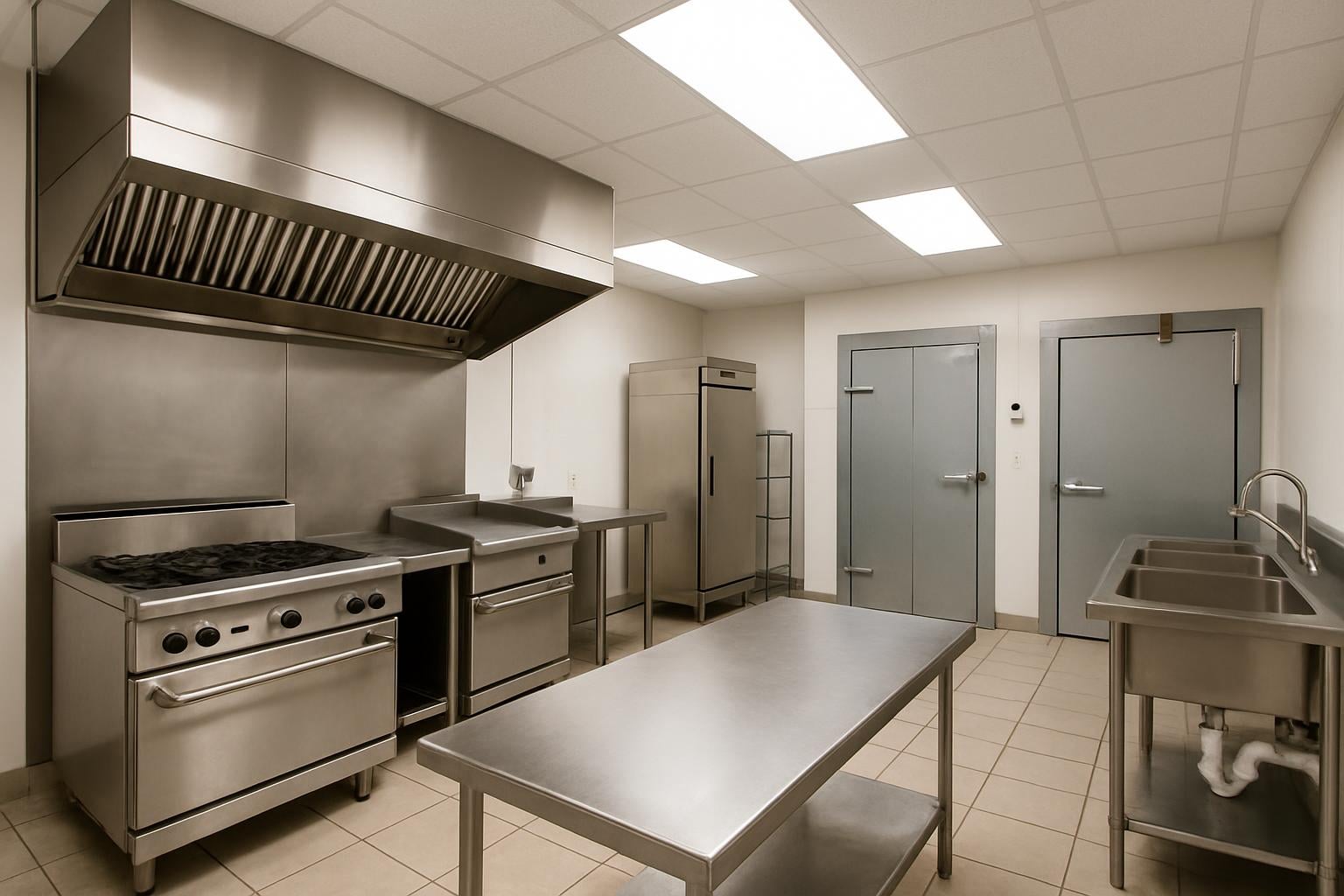
Compare hood, grease trap, walk-in, seating, patio, parking, utilities, and build-out condition before touring.

Market Context
What tenants need to understand about leasing restaurant space across Utah's distinct submarkets.
Utah has approximately 6,500 restaurant locations serving 3.5 million residents and generating annual industry sales of approximately $7.5 billion. The restaurant economy concentrates heavily along the Wasatch Front (Ogden through Provo, anchored by Salt Lake City) and along the I-15 corridor through Washington County (St. George). Utah has been one of the fastest-growing states in the United States for over a decade, with population growth driving consistent new restaurant demand across both established markets and emerging suburbs. The Silicon Slopes tech corridor anchored in Lehi and Draper has produced a high-income workforce demand profile unusual for the Mountain West.
Restaurant lease rates in Utah vary substantially by submarket. Park City Historic Main Street commands $90 to $165 per square foot annually, the highest restaurant rents in the Mountain West outside of Aspen and Vail. Salt Lake City Downtown and Sugar House run $30 to $65. Lehi's Silicon Slopes corridor ranges $30 to $50. Provo, Sandy, and Orem cluster in the $20 to $44 range. Ogden and St. George offer the most accessible entry costs at $16 to $38 per square foot annually. Statewide rent growth has accelerated meaningfully since 2020 as Utah has absorbed continued in-migration.
All Utah restaurant acquisitions involving alcohol service must work through the Department of Alcoholic Beverage Services (DABS) under Utah Code Title 32B. Utah is one of the most distinctive alcohol licensing jurisdictions in the United States. Liquor licenses do not transfer with a business or asset sale, so any buyer of a restaurant with alcohol service must apply for and receive a new license from DABS. Utah operates a statewide population-based quota: full-service restaurant licenses (liquor, wine, beer) are allocated at approximately 1 per 4,467 residents, gradually expanding through 2031 to 1 per 3,167. Bar licenses are allocated at approximately 1 per 10,200 residents, gradually expanding to 1 per 7,264. Bar license availability is particularly scarce statewide, with only roughly two to three dozen bar licenses available statewide at any given time. Restaurants licensed for alcohol service operate under Utah's 70/30 food sales rule, where annual alcohol revenue cannot exceed 30 percent of combined food and alcohol revenue. The 2026 omnibus alcohol bill (effective May 6, 2026) refined the 70/30 calculation formula, eliminated the requirement to lock alcohol when premises are closed, and allowed proximity variances for restaurant and hotel applicants near parks, playgrounds, and libraries with local consent.
Popular Markets
Six distinct regional markets across Utah, each with different rent ranges, demographic anchors, and operating profiles.
Tenant Guide
Compare hood, grease trap, walk-in, seating, patio, parking, utilities, and build-out condition before touring.
Ask whether the rentable opportunity is a direct lease, assignment, sublease, or turnkey build-out with existing restaurant infrastructure.
Confirm landlord consent, use approvals, health permits, alcohol licensing, signage, and local inspections for the address.
Compare base rent, NNN, tenant improvements, equipment needs, deposits, and permit costs before submitting an offer.
About PepperLot
PepperLot organizes restaurant space searches around the details tenants need in Utah: build-out condition, hood, grease trap, seating, rent structure, and permit context.

Utah restaurant lease rates range from $16 per square foot annually in Ogden and St. George to $165 per square foot for Park City Historic Main Street. Salt Lake City Downtown and Sugar House run $30 to $65. Lehi's Silicon Slopes corridor runs $30 to $50. Provo, Sandy, and Orem cluster in the $20 to $44 range. Beyond base rent, tenants should factor in CAM, property tax pass-through, insurance, and any landlord-required tenant improvements.
Utah is one of only a handful of states that operates a statewide population-based quota for full-service restaurant and bar licenses. Liquor licenses do not transfer with a lease or sale. Restaurants licensed for alcohol service must maintain at least 70 percent food sales. The Department of Alcoholic Beverage Services (DABS) controls all retail alcohol distribution at the state level. The 2026 omnibus alcohol bill (effective May 6, 2026) updated several requirements: the 70/30 calculation formula was refined, alcohol no longer must be locked when premises are closed, proximity variances are available near parks/playgrounds/libraries, and as of March 18, 2026 ID scanning is only required for patrons under 35.
A Limited Restaurant License authorizes beer and wine service (no liquor). It is significantly more accessible than a full-service restaurant license (liquor, wine, beer) and faster to obtain through DABS. Many Utah restaurants operate successfully on Limited Restaurant Licenses, particularly in markets like Provo and Orem where lower per-capita alcohol demand and full-service license scarcity make the limited license a practical alternative. Beer-Only Restaurant Licenses are also available and the simplest path for concepts that need beer service only.
Salt Lake City has the highest volume of second-generation restaurant lease inventory in Utah, with consistent turnover across Downtown, Sugar House, the 9th and 9th corridor, and Central Ninth. Ogden's Historic 25th Street produces steady second-generation inventory. Provo's Center Street and the University Place area in Orem add Utah Valley inventory. Park City has lower volume but occasional premium second-generation availability on Main Street and in Prospector Square. Lehi, St. George, and Sandy add growing second-generation inventory tied to ongoing restaurant turnover.
Utah restaurant leases typically run five to ten year initial terms with one or two five-year renewal options. Triple-net (NNN) structures are standard. Personal guarantees are common with scope varying by landlord. Free rent of two to four months is typical for second-generation space, extending to six or more months for first-generation buildouts. CAM, property tax pass-through, and insurance are tenant obligations under standard Utah NNN structures.